A cleanser for oily skin is a rinse-off product formulated to remove excess sebum, sweat, sunscreen and the day's grime from the surface of the skin without stripping the barrier that keeps it comfortable. It is a cosmetic, not an acne treatment: it clears the surface so that the rest of your routine, and any treatment your doctor prescribes, can do its job.
Oily skin starts in the sebaceous glands. A review of sebaceous gland function describes sebum production as hormone-driven and explains why over-active glands, blocked follicle openings and bacteria together set the stage for breakouts. Cleansing addresses only the first part of that chain, which is why a cleanser can help keep oily skin comfortable and clear-looking but cannot, on its own, be expected to prevent acne. Our articles on understanding sebum and keeping shine in check and why acne happens explain the rest of the chain.
The second thing a cleanser must do is leave the barrier alone. A review of mild cleansing technology describes how harsh surfactants bind to skin proteins and strip lipids, leaving the surface tighter, drier and more reactive; milder systems clean with much less of that damage. In Singapore's humidity the temptation is to scrub oily skin hard, and the usual result is skin that feels tight by lunchtime and shinier by evening.
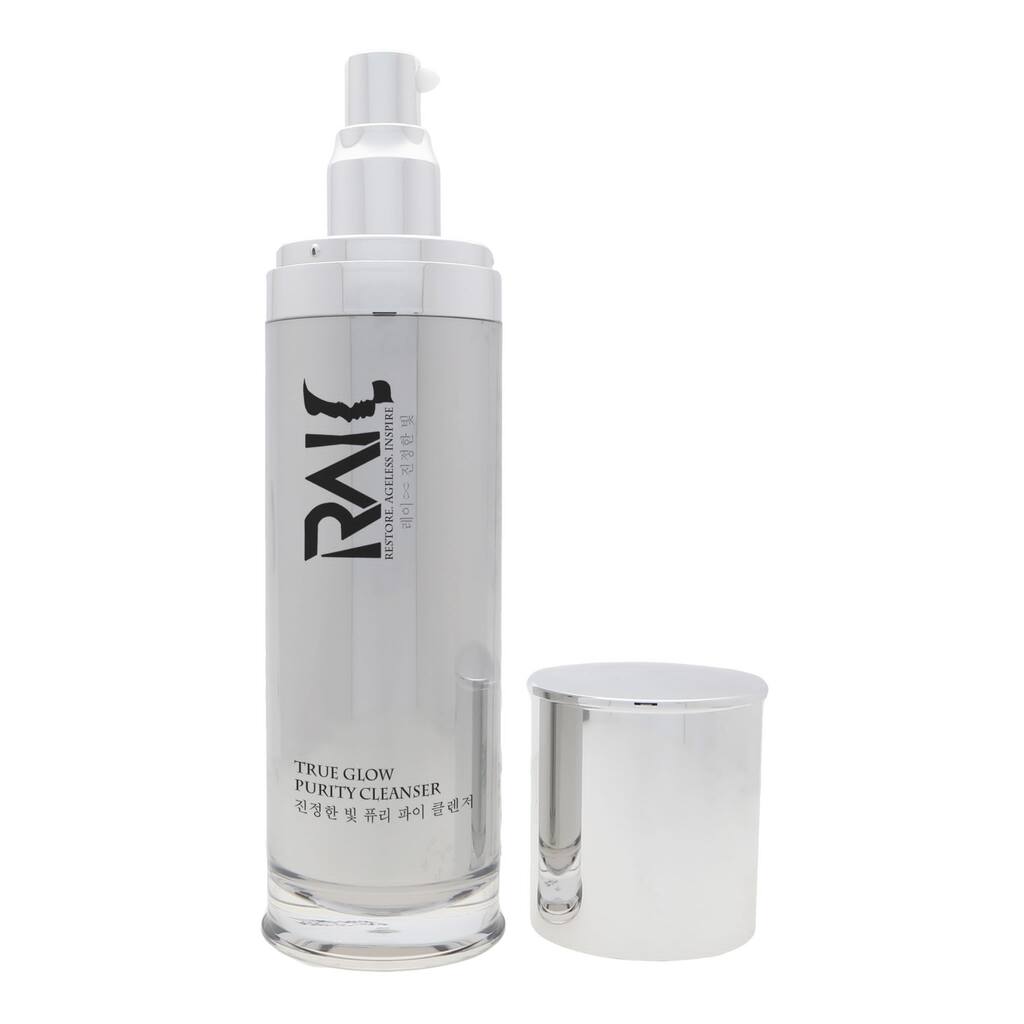
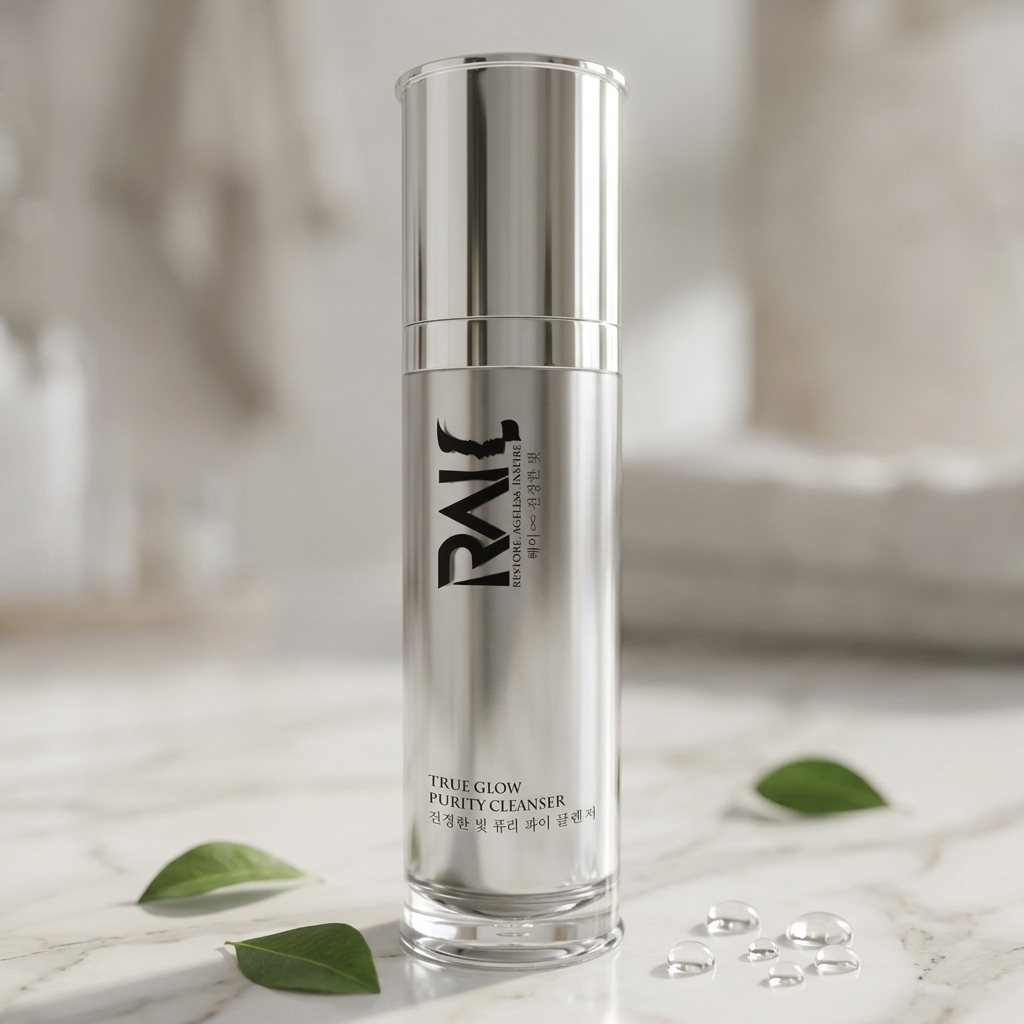
That is the brief the True Glow Purity Cleanser is written to: formulated for acne-prone and oily skin, cleansing away excess oil thoroughly while helping keep pores clear, without stripping the skin. For a longer discussion of textures, pH and what to avoid, see our guide to choosing a cleanser for acne-prone skin.
How to use it within the True Glow ritual
The directions on this page are: use morning and night, massage over damp skin, then rinse thoroughly. A few details make the difference.
Twice a day, not more
A randomised trial of face washing in men with mild to moderate acne compared washing once, twice and four times a day for six weeks with the same mild cleanser. The once-a-day group saw inflamed spots increase, the twice-a-day group saw non-inflamed spots improve, and the authors found that washing more often neither helped nor clearly harmed. Morning and night is the sensible rhythm; after sport or heavy sweating, a third rinse with water is enough.
Technique
Wet the face with lukewarm water, not hot. Work a small amount of cleanser between the palms, then massage over the whole face for 30 to 60 seconds, paying attention to the nose, chin and hairline where oil collects. Rinse thoroughly, because residue left behind is a common cause of the tight feeling people blame on the cleanser. Pat dry with a clean towel; do not rub.
Where it sits in the ritual
Cleansing is the step before everything else. On ordinary days, follow with your moisturiser and, in the morning, sunscreen. During recovery from a procedure, the Post Laser Intensive Recovery Serum goes on after cleansing; on freshly treated or weeping skin, use the cleanser only once your clinic has cleared it.
What to look for, and what to avoid
These are general points for any cleanser for oily or acne-prone skin, not a comparison of brands.
Look for
A finish that is clean but not squeaky. Skin should feel fresh and comfortable after rinsing. Tightness is a sign of stripping, not of a deeper clean.
A mild, skin-friendly pH. A study of 330 volunteers measured the natural surface pH of skin at about 4.7, and found that even tap water raises it for hours. Cleansers close to that range respect the skin's resident flora.
Fragrance-free or low fragrance. Acne-prone skin is often reactive skin, and fragrance is a common irritant.
A texture that suits the climate. Gel and light foaming textures rinse cleanly in humidity; richer cream cleansers suit skin that has been over-cleansed and needs a rest.
Plant-based and steroid-free. The True Glow range is plant-based and free from steroids and hydroquinone.
Avoid
Scrubbing and grainy exfoliating washes on skin with active spots; they spread inflammation and raise the risk of dark marks afterwards. See our article on post-inflammatory hyperpigmentation.
Hot water and long washes. Both remove more of the barrier lipid than the cleanser does.
Washing more than twice a day in the hope of controlling shine; it adds little and can leave skin tight.
Treating a cleanser as the whole plan. Painful, deep or scarring acne needs a doctor; a cleanser supports treatment, it does not replace it.
How Dr Sin Yong uses it
The True Glow Purity Cleanser is a favourite of Dr Sin Yong for his acne-prone patients. For his own patients he chooses the True Glow Purity Cleanser for acne-prone skin, used morning and night as the first step of the routine.
Frequently asked questions
Are gentle cleansers good for oily skin?
Yes. Oily skin needs thorough cleansing, but harsh cleansers strip the barrier and leave skin tight, reactive and often shinier later in the day. A gentle cleanser formulated for oily skin removes excess oil without that damage. Use it twice daily on damp skin and rinse well; if acne is painful or scarring, see a doctor.
How do I control oily skin?
Cleanse morning and night with a cleanser formulated for oily skin, moisturise lightly so the skin is not prompted to compensate, use a non-greasy sunscreen, and avoid scrubbing or washing more than twice a day. Blotting paper handles midday shine. Persistent oiliness with breakouts is worth discussing with a doctor, who can look at hormonal and other causes.
Which type of cleanser suits acne-prone skin?
A mild, low-fragrance cleanser with a skin-friendly pH that rinses clean without tightness. Gel and light foaming textures suit Singapore's humidity; cream textures suit skin that has been over-cleansed. Avoid gritty scrubs on active spots. A cleanser is a support step; for painful, deep or scarring acne, consult a doctor about treatment.
How often should I cleanse oily skin?
Twice a day. A six-week randomised trial in men with mild to moderate acne found that washing once a day was associated with more inflamed spots, twice a day with fewer non-inflamed spots, and four times a day with no extra benefit. After exercise, a rinse with water is enough. Washing more often rarely helps and can leave the skin tight.
What should I look for in a cleanser for oily skin?
Look for a clean, comfortable finish without squeakiness, a mild pH close to the skin's own, little or no fragrance, and a texture you can rinse fully in humid weather. Steer clear of hot water, scrubs and anything that leaves skin tight. If breakouts continue despite good cleansing, a doctor can advise on treatment.
Ananthapadmanabhan KP, Moore DJ, Subramanyan K, Misra M, Meyer F. Cleansing without compromise: the impact of cleansers on the skin barrier and the technology of mild cleansing. Dermatol Ther. 2004;17(Suppl 1):16-25. doi:10.1111/j.1396-0296.2004.04S1002.x. PMID 14728695. https://doi.org/10.1111/j.1396-0296.2004.04S1002.x
Choi JM, Lew VK, Kimball AB. A single-blinded, randomized, controlled clinical trial evaluating the effect of face washing on acne vulgaris. Pediatr Dermatol. 2006;23(5):421-427. doi:10.1111/j.1525-1470.2006.00276.x. PMID 17014635. https://doi.org/10.1111/j.1525-1470.2006.00276.x
Lambers H, Piessens S, Bloem A, Pronk H, Finkel P. Natural skin surface pH is on average below 5, which is beneficial for its resident flora. Int J Cosmet Sci. 2006;28(5):359-370. doi:10.1111/j.1467-2494.2006.00344.x. PMID 18489300. https://doi.org/10.1111/j.1467-2494.2006.00344.x