A brightening cleanser is a rinse-off product formulated for pigmented and uneven skin that removes the sunscreen, oil and dead surface cells which make skin look dull, and leaves it clean, comfortable and ready to absorb the serums that follow. It is a cosmetic, not a pigmentation treatment: it is on the skin for under a minute, so its job is to support radiance at the surface, not to remove pigment.
Uneven tone has several causes, and it helps to know which one you have. Post-inflammatory hyperpigmentation is the dark mark left after a spot, a scratch or a procedure; a review in skin of colour describes it as more frequent and more severe in darker skin, with sun protection, including a sunscreen, as part of first-line management. Melasma is a chronic, symmetrical facial pigmentation whose known triggers include sun exposure, pregnancy and hormones, affecting mainly women and more pigmented skin types. Sun spots and general dullness are the third group. Our articles on fading dark marks, melasma and uneven skin tone cover each in turn.
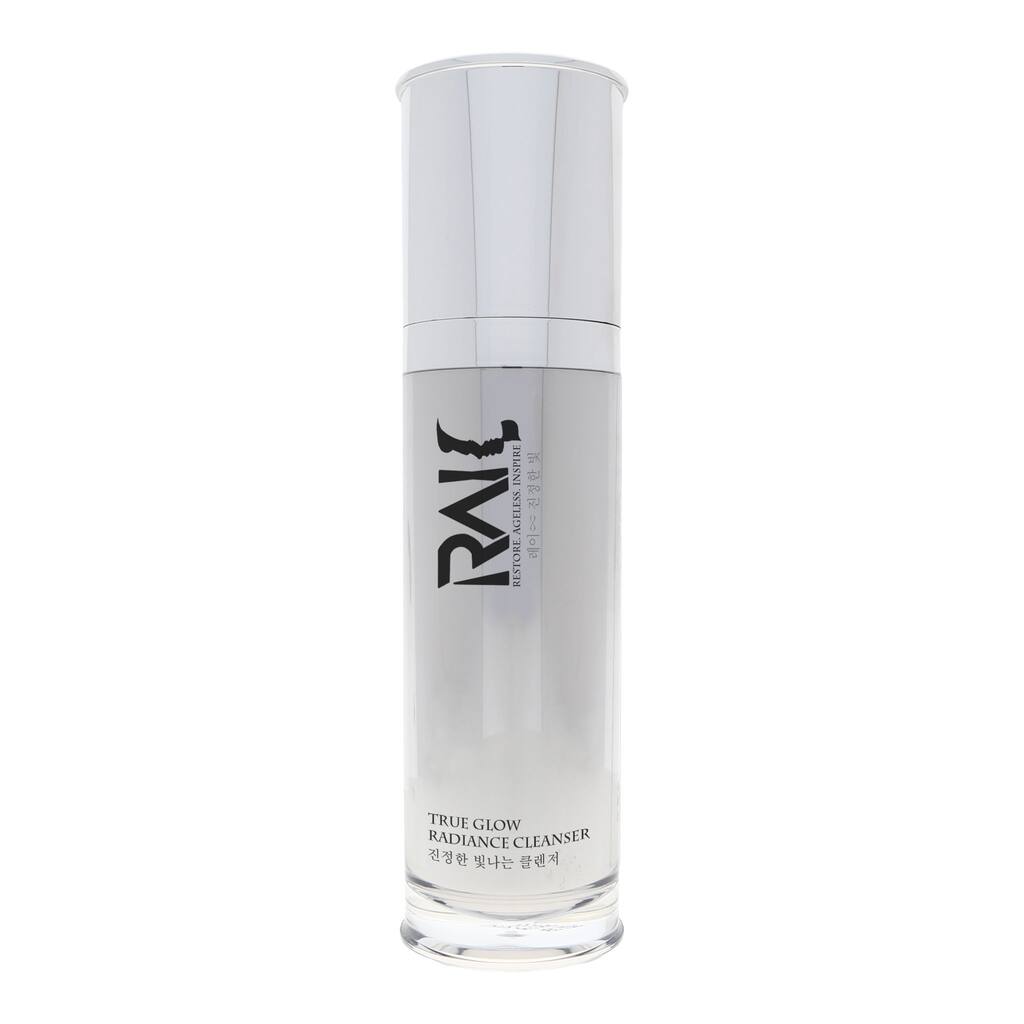
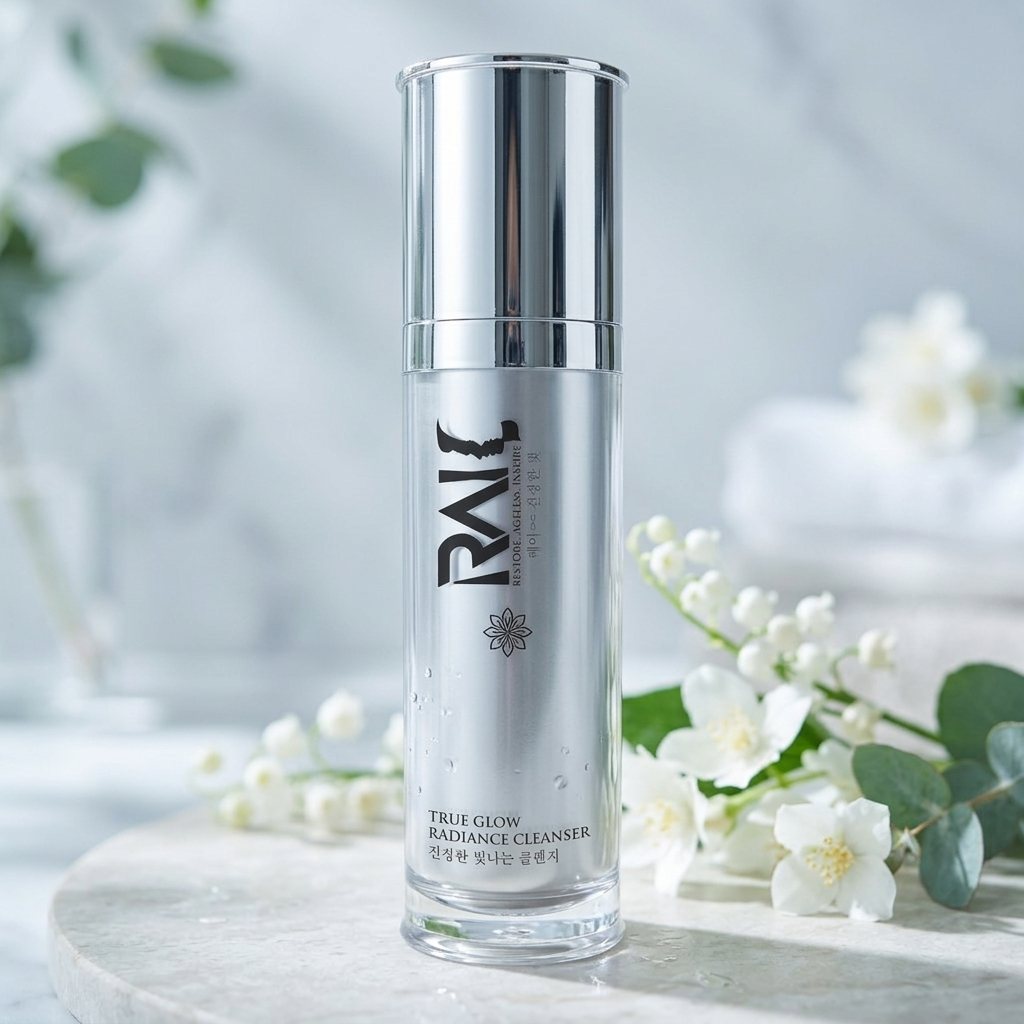
What all three share is that pigment sits in the living layers of the skin, where a cleanser does not reach. What a brightening cleanser is designed to do is the surface work: lift away the film that dulls the complexion, do it gently enough that the skin is not irritated (irritation is itself a trigger for dark marks), and prepare the skin so that leave-on products and any treatment your doctor prescribes are applied to a clean base. That is the role of the True Glow Radiance Cleanser in the ritual.
How to use it within the True Glow ritual
The directions on this page are: use morning and night, massage over damp skin, then rinse. Here is how it fits with the rest of the routine.
Morning
Cleanse with lukewarm water, massaging gently for 30 to 60 seconds and rinsing fully. Pat dry, apply your serum and moisturiser, then a broad-spectrum sunscreen. For pigmented skin the sunscreen is the step that protects everything else; a brightening routine without it is working against itself.
Evening
Cleanse again to remove the day's sunscreen and grime, which is the moment the cleanser earns its name: skin that goes to bed clean looks clearer in the morning. Follow with your evening serum. If your doctor has prescribed a pigmentation cream, apply it as directed after cleansing.
During and after procedures
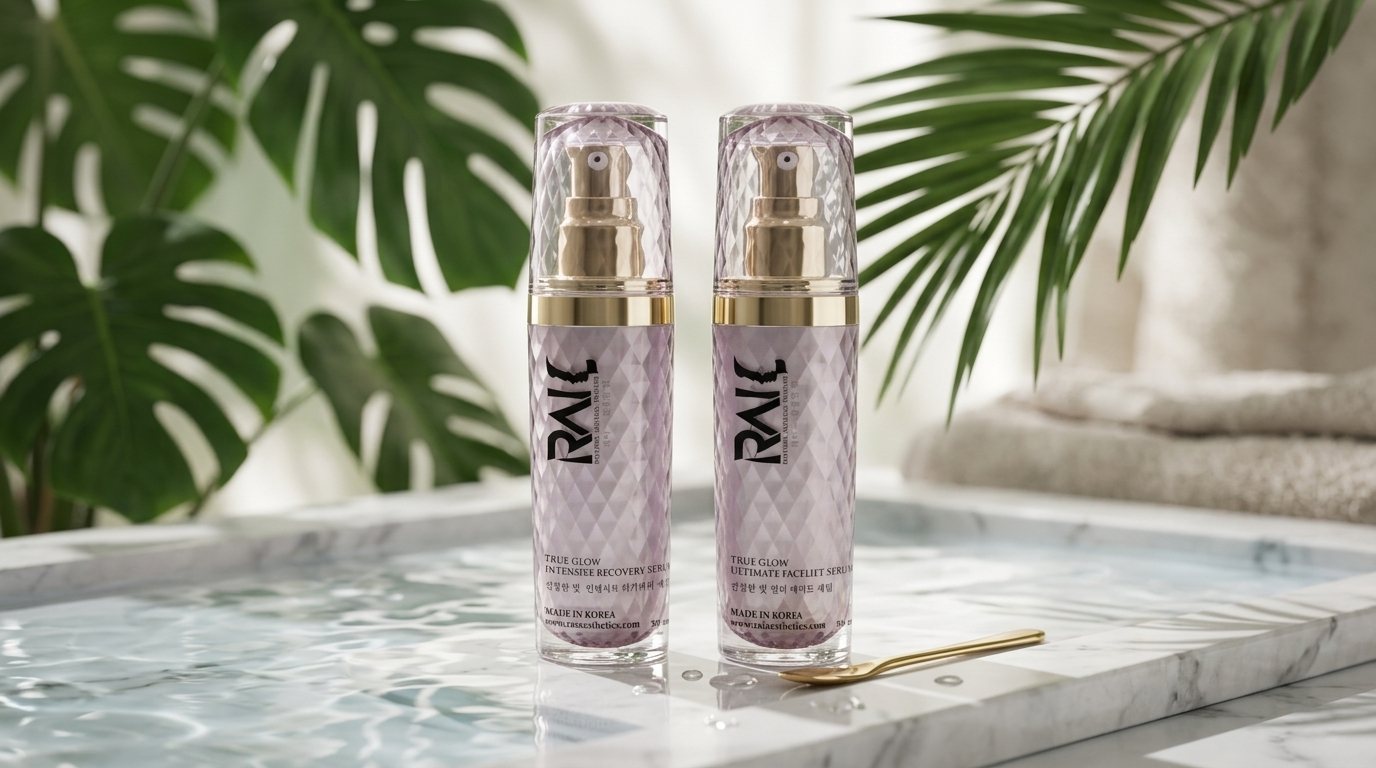
After a pigmentation laser or a peel, the surface may be raw for a few days; use the cleanser only once your clinic has cleared it, and keep the technique light. In that window the Post Laser Intensive Recovery Serum is applied after cleansing, 2 to 3 times a day, and daily sun protection matters more than ever because fresh marks darken quickly in the sun.
If your skin is also oily or acne-prone
Choose one cleanser rather than alternating at random. The True Glow Purity Cleanser is formulated for oily and acne-prone skin; the Radiance Cleanser is formulated for pigmented and uneven skin. Our cleanser guide for acne-prone skin helps you decide.
What to look for, and what to avoid
General points for any brightening cleanser, whichever brand you are considering.
Look for
Honest wording. A cleanser can be formulated to support a brighter, more even-looking complexion. One that promises to remove pigmentation or change your skin colour is overpromising, and that kind of promise is a reason to be cautious about the formula behind it.
Gentleness first. Because irritation can leave new marks on pigment-prone skin, the cleanser should rinse clean without tightness, stinging or redness.
Free from steroids and hydroquinone. These are prescription-strength ingredients that do not belong in a daily wash. The True Glow range is plant-based and free from both.
Compatibility with your routine. The cleanser should sit under your leave-on products and any prescribed cream without competing with them.
Avoid
Harsh scrubs and daily exfoliating washes. Over-exfoliation inflames the skin, and inflammation is a trigger for post-inflammatory hyperpigmentation.
Skipping sunscreen because you are using a brightening product. Sun exposure is a known trigger for melasma and darkens existing marks.
Products of unknown origin that promise fast results. Buy skincare from sources you can verify, and avoid products that promise to bleach or whiten skin.
Self-treating new, changing or asymmetric pigmentation. A doctor should assess it first, since several conditions look alike.
Judge a brightening cleanser on how the skin feels after a month: calm, clean and clearer-looking. Changes in pigment itself come from sun protection, leave-on products and treatments, over months.
How Dr Sin Yong uses it
For patients concerned with pigmentation or melasma, Dr Sin Yong offers the RAI True Glow Radiance Cleanser for everyday support of a brighter, more even complexion, alongside the laser treatments he provides for pigmentation.
Frequently asked questions
What does a brightening cleanser do?
It removes the sunscreen, oil and dead surface cells that make skin look dull, gently enough not to irritate pigment-prone skin, and leaves a clean base for the serums that follow. It is a cosmetic surface step; it does not remove pigment. Use it morning and night with a daily sunscreen.
Does cleanser make your face brighter?
A good cleanser makes skin look fresher and clearer by clearing the film that dulls it, and that effect is visible straight after rinsing. Changes to actual pigmentation come from sun protection, leave-on products and treatments over months, not from a wash. Think of the cleanser as the base of the routine, not its result.
Can a cleanser help with pigmentation?
Indirectly. A gentle cleanser keeps pigment-prone skin calm, since irritation can trigger new dark marks, and it prepares the skin for the leave-on products and treatments that act on pigment. It will not fade existing marks on its own. If pigmentation is new, spreading or uneven in shape, have a doctor assess it first.
Can I use a brightening cleanser every day?
Yes. The directions on this page are morning and night, massaged over damp skin and rinsed. Daily use is fine because the cleanser is gentle and rinse-off, unlike exfoliating washes, which should not be used daily on pigment-prone skin. Pause it and seek advice if you notice stinging, redness or new marks.
Can I use it after a pigmentation laser or peel?
Only once your clinic has cleared cleansing, usually when the surface has closed. Until then use water or whatever your clinic issued. When you restart, keep the massage light, rinse with lukewarm water and apply the Post Laser Intensive Recovery Serum afterwards. Follow your treating doctor's instructions on timing and sun protection.
References
Davis EC, Callender VD. Postinflammatory hyperpigmentation: a review of the epidemiology, clinical features, and treatment options in skin of color. J Clin Aesthet Dermatol. 2010;3(7):20-31. PMID 20725554; PMCID PMC2921758. https://pmc.ncbi.nlm.nih.gov/articles/PMC2921758/
Handel AC, Miot LDB, Miot HA. Melasma: a clinical and epidemiological review. An Bras Dermatol. 2014;89(5):771-782. doi:10.1590/abd1806-4841.20143063. PMID 25184917; PMCID PMC4155956. https://doi.org/10.1590/abd1806-4841.20143063
Ortonne JP, Bissett DL. Latest insights into skin hyperpigmentation. J Investig Dermatol Symp Proc. 2008;13(1):10-14. doi:10.1038/jidsymp.2008.7. PMID 18369333. https://doi.org/10.1038/jidsymp.2008.7
Ananthapadmanabhan KP, Moore DJ, Subramanyan K, Misra M, Meyer F. Cleansing without compromise: the impact of cleansers on the skin barrier and the technology of mild cleansing. Dermatol Ther. 2004;17(Suppl 1):16-25. doi:10.1111/j.1396-0296.2004.04S1002.x. PMID 14728695. https://doi.org/10.1111/j.1396-0296.2004.04S1002.x