Ablative laser resurfacing — whether fractional CO2, erbium, or a dedicated scar-resurfacing laser — is one of the most effective ways to remodel skin texture, soften acne scars and reverse sun damage. But the treatment deliberately injures the skin's surface, and the days that follow determine your result. Choosing the right recovery serum is one of the most important decisions in that window.
Why ablative laser needs dedicated aftercare
Ablative lasers work by vaporising precise micro-columns of skin, prompting a wound-healing cascade that lays down fresh collagen and new skin. Immediately afterward the treated area is raw, inflamed, losing water rapidly, and highly vulnerable to both infection and post-inflammatory hyperpigmentation (PIH) — the darkening that can follow any injury, especially in Asian and deeper skin tones.
This is a genuinely different situation from everyday skincare. Active ingredients like retinoids, vitamin C and exfoliating acids — normally beneficial — can sting, sensitise and prolong redness on freshly lasered skin. What the skin needs instead is calm, hydration and the raw materials to rebuild.
What to look for in a post-laser serum
The best serum after ablative laser resurfacing does four things: it deeply hydrates to maintain the moist environment that heals fastest with least scarring; it calms inflammation to reduce redness and discomfort; it supplies nutrients that support new skin synthesis; and it lowers the risk of PIH. Just as important is what it leaves out — no steroids, no hydroquinone, no fragrance or harsh actives that could irritate compromised skin.
The RAI True Glow Post Laser Intensive Recovery Serum was formulated for exactly this scenario. Its plant-based formula is free from steroids and hydroquinone, and it targets the four priorities above. Many patients report noticeably decreased redness, less discomfort and improved healing within hours of consistent application.
How to use it after scar resurfacing
Apply the serum generously immediately after treatment. In the first two days you can reapply as often as every hour, or as directed by your doctor, layering your own moisturiser on top once the serum absorbs. From there, regular application several times a day supports optimised healing until the skin has fully re-epithelialised — usually within five to eight days, when scabs and redness have resolved.
Alongside the serum, the non-negotiables are strict sun avoidance and, once tolerated, a broad-spectrum SPF 30 or higher. Never pick at scabs; let them shed naturally.
It's a doctor's choice
This is the serum aesthetic key opinion leader Dr Sin Yong chooses for his own patients after ablative laser and scar resurfacing procedures. For skin recovering from deliberate, controlled injury, the right recovery serum isn't a luxury — it's part of the treatment.
The RAI recover-then-maintain approach
Whatever your skin concern, the principle behind the RAI True Glow range stays the same: help the skin recover first, then maintain the result. After any treatment or during any flare, the skin is at its most vulnerable — and its most receptive. Calming inflammation and supplying the right nutrients during this window makes a real difference to how the skin heals and how it looks afterward.
That is the role of the two-step ritual. The True Glow Post Laser Intensive Recovery Serum is step one — used two to three times a day after a laser, HIFU, Morpheus8, extraction or cleansing facial to reduce inflammation, deliver optimal nutrients for skin synthesis and lower the risk of post-inflammatory pigmentation. From two days later, the True Glow Ultimate Facelift Serum becomes step two, used twice daily to tighten, nourish and brighten for lasting radiance.
Every formula in the range is plant-based and free from steroids and hydroquinone, so you support your skin without the risks those harsher agents carry. Paired with daily sun protection and a gentle, consistent routine, this is how skin is guided back toward health — and kept there.
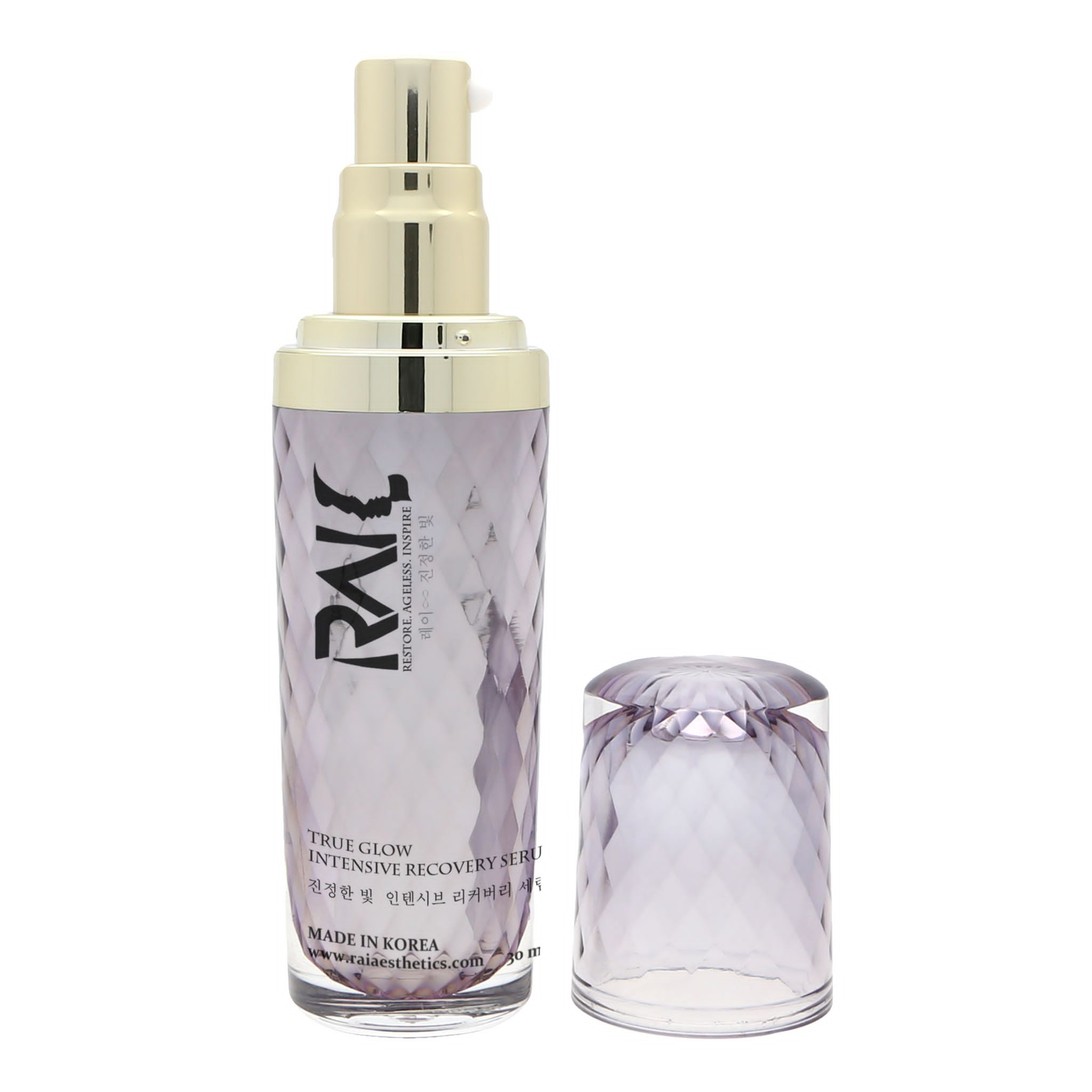
True Glow Post Laser Intensive Recovery Serum
The first step to calm, nourished, recovering skin.
View product →After ablative laser or scar resurfacing, choose a hydrating, calming, steroid-free recovery serum like the RAI True Glow Post Laser Intensive Recovery Serum — and pair it with strict sun protection.
Day-by-day: what to expect after ablative laser
Ablative resurfacing removes the surface layer of skin in a controlled way, so the first week follows a fairly predictable pattern. Your treating doctor's timeline takes priority; this is the usual course.
- Day 0–2: the skin feels hot, tight and sunburnt. Expect redness, swelling and some weeping or pinpoint bleeding from the fractional channels. Cool compresses, sleeping with your head raised and frequent, light layers of a post-laser recovery serum keep the surface moist, which is what new skin needs.
- Day 3–6: swelling peaks and starts to ease. Crusting and flaking begin, and treated pigment spots may look darker before they lift. Keep cleansing gently and keep the surface covered.
- Day 5–10: re-epithelialisation is usually complete, often by day five to eight, and the flaking is mostly over. The skin looks pink and feels smoother but thinner. Your doctor will typically say when sunscreen and makeup can start.
- Week 2 onwards: pinkness fades over several weeks to months. Collagen remodelling continues for around three months, so texture keeps improving long after the downtime ends.
Deeper settings, larger areas and a history of post-inflammatory hyperpigmentation all lengthen this timeline.
What to put on your skin — and what to avoid
During the open-skin phase the aim is simple: keep it clean, keep it moist, keep it out of the sun. Use only products your doctor has approved.
Put on
- A bland, fragrance-free cleanser or saline, patted — never rubbed — with a clean towel.
- Your prescribed barrier ointment or a calming, fragrance-free recovery serum, reapplied whenever the skin feels dry or tight.
- Broad-spectrum SPF 30 or higher once the surface has closed, reapplied through the day, plus a hat and shade.
- Mineral or non-comedogenic makeup only once your doctor has cleared it, usually after the flaking stops.
Leave off
- Exfoliants, anti-ageing actives, brightening serums, scrubs and alcohol-based toners until your doctor restarts them, commonly two to six weeks.
- Picking, peeling or scratching crusts — a common cause of scarring and pigment marks after laser.
- Saunas, hot yoga, steam rooms, hard workouts and swimming until the skin has fully closed; heat, sweat and pool water irritate open skin.
If your treatment was fractional CO2 specifically, our guide to skin recovery after CO2 laser walks through the crusting phase in more detail.
When to call your doctor
Some discomfort is normal; a few signs are not. Contact your treating clinic the same day if you notice:
- Pain or swelling that gets worse after day three instead of better.
- Yellow crusting, pus, an unpleasant smell, or spreading redness and warmth — possible infection.
- Clusters of small blisters or sores, especially if you have had cold sores before. Tell your doctor about any cold-sore history before treatment so prevention can be planned.
- Fever, chills or feeling generally unwell.
- Redness that is still intense beyond two weeks, or any area that looks raised or dented as it settles.
A photo sent to the clinic is usually the quickest way to get an answer.
Frequently asked questions
What should I put on my skin after laser?
Only what your treating doctor has approved: a bland cleanser, the prescribed ointment or a fragrance-free recovery serum applied in thin, frequent layers, and broad-spectrum sunscreen once the surface has closed. A product formulated for post-procedure skin, such as True Glow Intensive Recovery Serum, is designed for this phase. Follow your treating doctor's instructions.
What skincare can I use after laser?
For the first one to two weeks, keep to a gentle cleanser, a calming moisturiser or recovery serum, and sunscreen. Exfoliants, anti-ageing actives and brightening products are usually paused for two to six weeks and reintroduced one at a time. Timings vary with the laser and your skin, so follow your treating doctor's instructions.
What should I do with my skin after a laser treatment?
Keep it clean, moist and out of the sun. Cleanse gently twice a day, reapply your recovery product whenever the skin feels tight, sleep with your head raised for the first nights, and let crusts fall off on their own. Avoid heat, sweat and swimming until the skin has closed. Follow your treating doctor's instructions.
What not to do after face laser?
Do not pick or scrub flaking skin, do not use exfoliants or strong actives, do not expose the face to direct sun, and avoid saunas, hot showers, hard exercise and swimming for the first several days. Skip makeup until the surface has closed. If unsure about any product, follow your treating doctor's instructions.
References
- Metelitsa AI, Alster TS. Fractionated laser skin resurfacing treatment complications: a review. Dermatologic Surgery. 2010;36(3):299-306. doi:10.1111/j.1524-4725.2009.01434.x https://doi.org/10.1111/j.1524-4725.2009.01434.x
- Nanni CA, Alster TS. Complications of carbon dioxide laser resurfacing. An evaluation of 500 patients. Dermatologic Surgery. 1998;24(3):315-320. doi:10.1111/j.1524-4725.1998.tb04161.x https://doi.org/10.1111/j.1524-4725.1998.tb04161.x
- Davis EC, Callender VD. Postinflammatory hyperpigmentation: a review of the epidemiology, clinical features, and treatment options in skin of color. Journal of Clinical and Aesthetic Dermatology. 2010;3(7):20-31. PMID 20725554 https://jcadonline.com/postinflammatory-hyperpigmentation-a-review-of-the-epidemiology-clinical-features-and-treatment-options-in-skin-of-color/