CO2 laser resurfacing is one of the most effective ways to reverse sun damage, soften wrinkles and refine skin texture. But the results depend enormously on how you care for your skin in the days that follow. The recovery window is where great outcomes are made — or lost.
What happens to your skin after CO2 laser
Fractional CO2 laser works by creating controlled micro-columns of thermal injury in the skin. This prompts the body to synthesise fresh collagen and new skin, but it also means the treated area is temporarily raw, inflamed and vulnerable. Redness, swelling, a sunburn-like sensation and light scabbing are normal in the first several days.
During this phase the skin barrier is compromised. It is losing water rapidly, it is prone to inflammation, and it is at risk of post-inflammatory hyperpigmentation — the darkening that can follow any injury to the skin, particularly in Asian and deeper skin tones.
Why the right serum matters
This is precisely the window the RAI True Glow Post Laser Intensive Recovery Serum was formulated for. Applied generously and frequently after treatment, it deeply hydrates the healing skin, delivers optimal nutrients for new skin synthesis, and helps reduce inflammation and the risk of PIH.
Many patients notice decreased redness, less discomfort and improved healing within hours of consistent application. The serum can be applied every hour in the first two days, or as directed by your doctor, then several times daily until the skin has fully re-epithelialised.
The non-negotiables of laser aftercare
Sun avoidance is critical — freshly lasered skin darkens easily under UV. Use hats, umbrellas and shade, and once the skin can tolerate it, a broad-spectrum SPF 30 or higher. Do not pick at scabs; let them shed naturally. Keep the skin hydrated at all times, as a moist healing environment produces the best results with the least scarring.
Avoid active ingredients like retinoids and acids until your skin has healed and your doctor gives the go-ahead.
Transitioning to maintenance
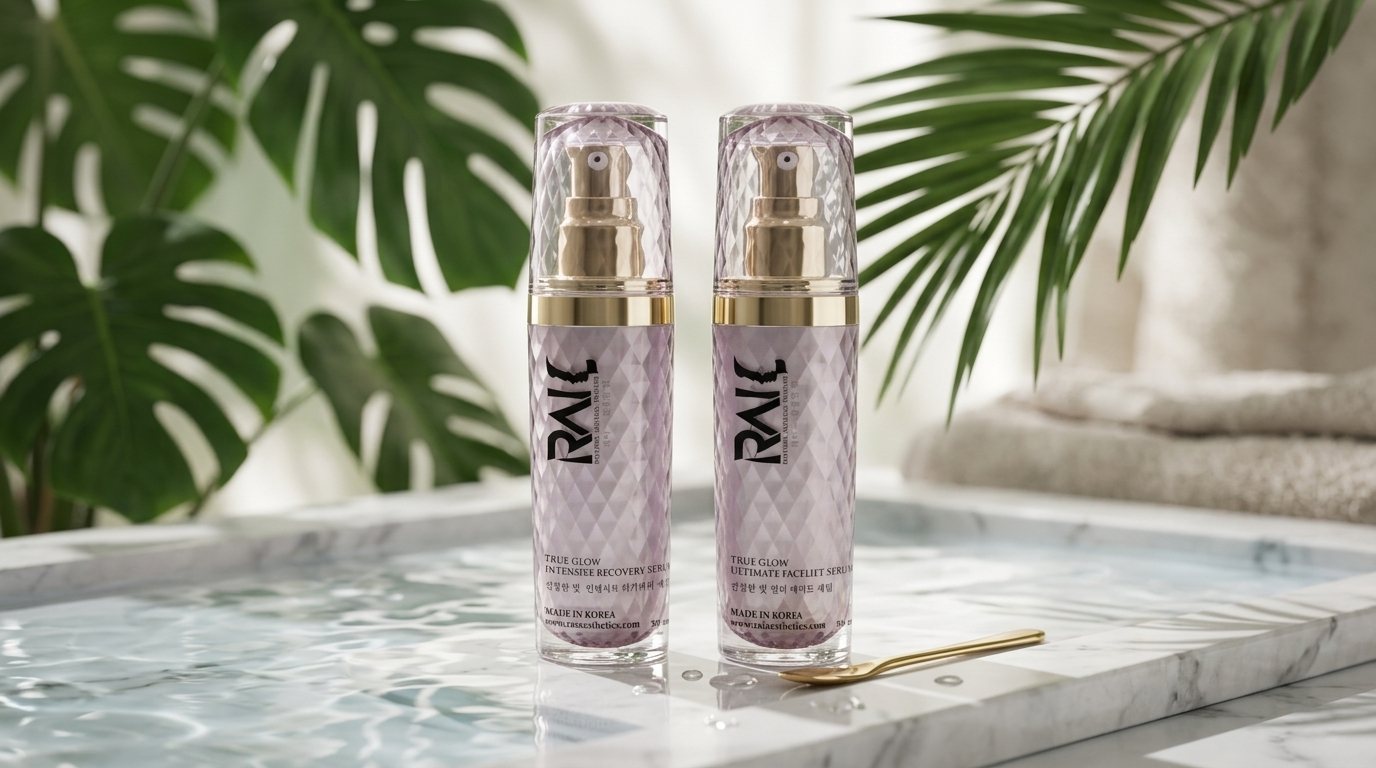
Once the skin has healed — typically within five to eight days — you can begin building on your result. Adding the RAI True Glow Ultimate Facelift Serum as step two supports ongoing firmness, nutrition and brightness, helping you maintain the rejuvenation the laser started.
The RAI recover-then-maintain approach
Whatever your skin concern, the principle behind the RAI True Glow range stays the same: help the skin recover first, then maintain the result. After any treatment or during any flare, the skin is at its most vulnerable — and its most receptive. Calming inflammation and supplying the right nutrients during this window makes a real difference to how the skin heals and how it looks afterward.
That is the role of the two-step ritual. The True Glow Post Laser Intensive Recovery Serum is step one — used two to three times a day after a laser, HIFU, Morpheus8, extraction or cleansing facial to reduce inflammation, deliver optimal nutrients for skin synthesis and lower the risk of post-inflammatory pigmentation. From two days later, the True Glow Ultimate Facelift Serum becomes step two, used twice daily to tighten, nourish and brighten for lasting radiance.
Every formula in the range is plant-based and free from steroids and hydroquinone, so you support your skin without the risks those harsher agents carry. Paired with daily sun protection and a gentle, consistent routine, this is how skin is guided back toward health — and kept there.
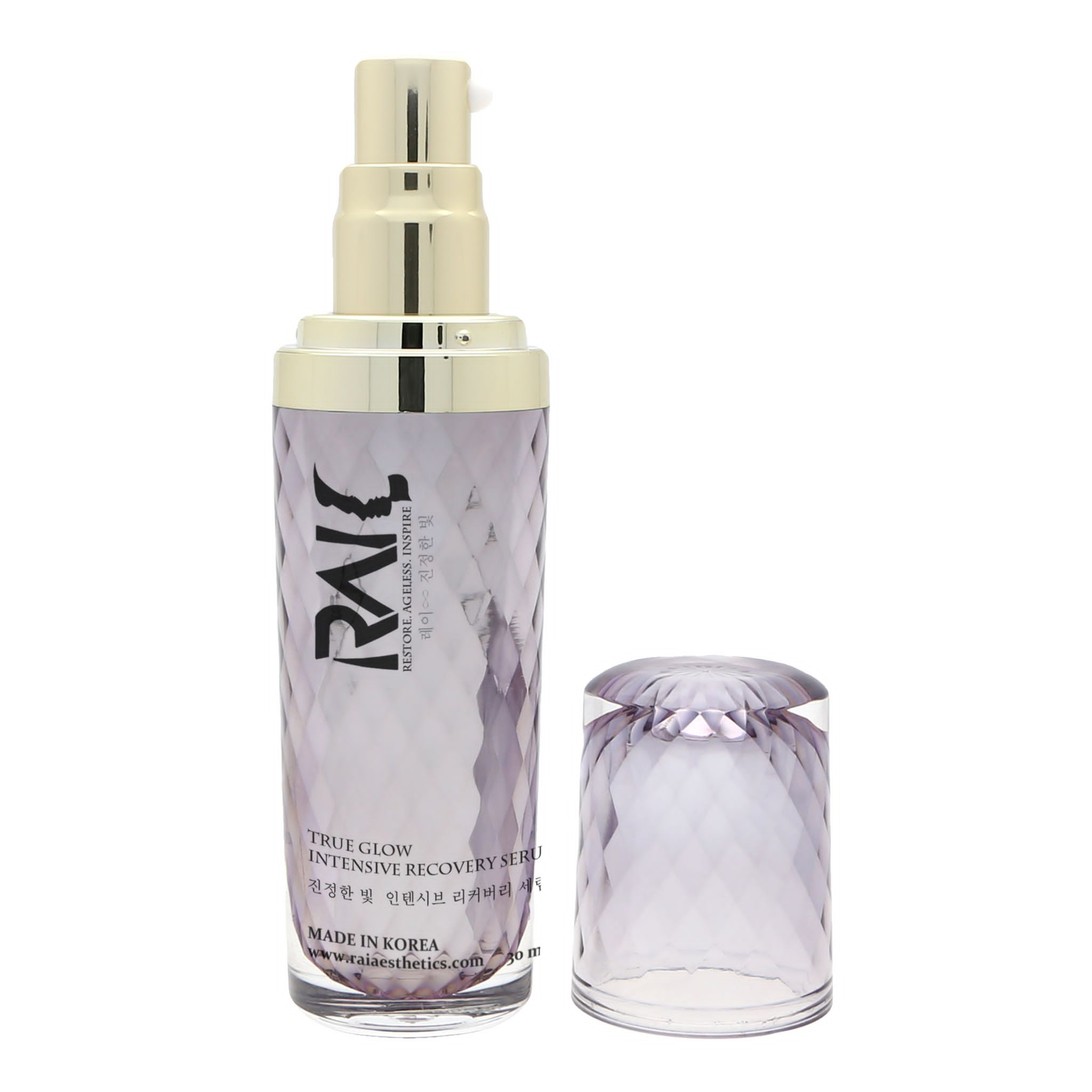
True Glow Post Laser Intensive Recovery Serum
The first step to calm, nourished, recovering skin.
View product →CO2 laser results are made in recovery. Hydrate intensively, avoid sun, never pick, and use a dedicated recovery serum to calm skin and reduce the risk of pigmentation.
Day-by-day: CO2 laser recovery timeline
Fractional CO2 is one of the deeper resurfacing lasers, so recovery is longer than after a pigment or non-ablative laser. Settings vary, and your treating doctor's timeline overrides anything here, but the broad pattern is consistent.
- Day 1: the face feels hot, tight and raw, like a strong sunburn. Pinpoint bleeding and clear weeping from the micro-channels are normal. Cool compresses and a thin, frequently reapplied layer of a recovery serum after laser or your prescribed ointment keep the surface from drying out.
- Days 2–3: swelling peaks, often worst around the eyes in the morning. A fine brownish crust forms over the treated grid. Sleep propped up.
- Days 4–6: the crust loosens and flaking begins — usually the itchiest stretch. Keep the skin moist; it flakes off more cleanly when not dry.
- Days 5–14: new skin forms across most of the face, often by day five to eight. It looks pink and shiny and feels tight; many people return to work now, and makeup is usually allowed by the second week.
- Weeks 3–12: pinkness settles slowly, and collagen remodelling continues for about three months — this is where the texture result is made.
What to put on your skin — and when makeup can return
The products question is really a timing question.
Days 1–7: occlusive and calming
Use only what your doctor has approved: a prescribed ointment or barrier balm, or a fragrance-free, calming recovery serum in thin layers, reapplied several times a day. Cleanse with lukewarm water and a non-foaming cleanser, or saline if instructed, and pat dry. No sunscreen on open skin unless your doctor says otherwise.
Days 7–14: barrier support and SPF
Once the surface has closed, switch to a lighter, fragrance-free moisturiser and start broad-spectrum SPF 30 or higher every morning, reapplied through the day. Mineral-type sunscreens are often better tolerated.
Makeup
Wait until there is no open or crusted skin, usually around day 7–10, and ask your doctor first. Choose mineral or non-comedogenic makeup, apply with clean brushes, and remove it gently with a cream cleanser.
Hold off until cleared
Exfoliants, anti-ageing actives, brightening serums, scrubs and waxing are commonly paused for four to six weeks. For more on what to avoid after any resurfacing laser, see our guide to skincare after ablative laser resurfacing.
When to call your doctor
Call your clinic the same day — a photo helps — if you notice:
- Pain or swelling that increases after day three.
- Yellow crusting, pus, or an unpleasant smell.
- Spreading redness or warmth beyond the treated area.
- Groups of small blisters or sores, particularly with a history of cold sores — mention that history before treatment.
- Fever or chills.
- Any area still raw past day ten, or that looks raised, dented or unusually pale as it settles.
Pinkness beyond two weeks is common after CO2; mention it at your review. Post-inflammatory hyperpigmentation is reported more often in Asian skin, which is why sun avoidance matters in Singapore.
Frequently asked questions
What should I put on my skin after a CO2 laser?
In the first week, only your doctor-approved barrier ointment or a fragrance-free recovery serum, applied thinly and often, with gentle cleansing in between. True Glow Intensive Recovery Serum is formulated for this phase. Sunscreen starts once the surface has closed. Timings depend on your settings, so follow your treating doctor's instructions.
What kind of makeup should I use after a CO2 laser treatment?
Wait until there is no open or crusted skin, usually around day seven to ten, and check with your clinic first. Choose mineral or non-comedogenic makeup, apply with clean fingertips or brushes, and remove it with a gentle cream cleanser rather than wipes. If anything stings, stop and follow your treating doctor's instructions.
What kind of cream should I use after a CO2 laser treatment?
Early on, a bland occlusive ointment or a calming post-procedure serum that keeps the surface moist without fragrance or actives. From about day seven, a light fragrance-free moisturiser plus broad-spectrum SPF 30 or higher. Avoid anything labelled anti-ageing, exfoliating or brightening until cleared. Follow your treating doctor's instructions on products.
What should I do after a CO2 laser treatment?
Rest for the first two to three days, keep the skin moist and clean, sleep with your head raised, avoid sun, heat and exercise, and never pick the crust. Attend your review, send photos if anything changes, and reintroduce actives only when cleared. Above all, follow your treating doctor's instructions.
References
- Ramsdell WM. Fractional carbon dioxide laser resurfacing. Seminars in Plastic Surgery. 2012;26(3):125-130. doi:10.1055/s-0032-1329414 https://doi.org/10.1055/s-0032-1329414
- Nanni CA, Alster TS. Complications of carbon dioxide laser resurfacing. An evaluation of 500 patients. Dermatologic Surgery. 1998;24(3):315-320. doi:10.1111/j.1524-4725.1998.tb04161.x https://doi.org/10.1111/j.1524-4725.1998.tb04161.x
- Metelitsa AI, Alster TS. Fractionated laser skin resurfacing treatment complications: a review. Dermatologic Surgery. 2010;36(3):299-306. doi:10.1111/j.1524-4725.2009.01434.x https://doi.org/10.1111/j.1524-4725.2009.01434.x