HIFU (High-Intensity Focused Ultrasound) has become a favourite for non-surgical lifting because it tightens and lifts from deep within the skin with little to no visible downtime. But 'little downtime' is not 'no aftercare' — how you support your skin afterwards influences both comfort and results.
How HIFU works beneath the surface
HIFU delivers focused ultrasound energy to precise depths beneath the skin, heating the foundational layers to stimulate collagen production and tightening. Because the energy bypasses the surface, the skin on top usually looks normal — but underneath, a controlled healing and remodelling process is underway.
Some people experience mild redness, tenderness, slight swelling or tingling for a few hours to a few days. Occasionally deeper tissues feel a little sore as the collagen-building response gets to work.
Supporting skin after HIFU
Even though the surface is intact, calming and nourishing the skin helps recovery feel smoother. The RAI True Glow Post Laser Intensive Recovery Serum can be applied two to three times a day to reduce inflammation, deliver optimal nutrients and keep skin comfortable and hydrated as the deeper tissues remodel.
From two days after your session, adding the RAI True Glow Ultimate Facelift Serum as a maintenance step complements the lifting effect of HIFU — supporting continued firmness and a brighter, more even tone as your collagen matures over the following weeks.
The weeks that follow
HIFU results are not instant. Collagen remodelling unfolds over roughly eight to twelve weeks, with tightening building gradually. Consistent daily maintenance during this period helps you get the most from the treatment. Stay hydrated, protect against the sun, and keep your routine steady.
Getting the best long-term result
Think of HIFU as the trigger and your daily routine as the amplifier. The lift comes from within, but nutrition, hydration and firming support at the surface help the result show at its best — and last.
The RAI recover-then-maintain approach
Whatever your skin concern, the principle behind the RAI True Glow range stays the same: help the skin recover first, then maintain the result. After any treatment or during any flare, the skin is at its most vulnerable — and its most receptive. Calming inflammation and supplying the right nutrients during this window makes a real difference to how the skin heals and how it looks afterward.
That is the role of the two-step ritual. The True Glow Post Laser Intensive Recovery Serum is step one — used two to three times a day after a laser, HIFU, Morpheus8, extraction or cleansing facial to reduce inflammation, deliver optimal nutrients for skin synthesis and lower the risk of post-inflammatory pigmentation. From two days later, the True Glow Ultimate Facelift Serum becomes step two, used twice daily to tighten, nourish and brighten for lasting radiance.
Every formula in the range is plant-based and free from steroids and hydroquinone, so you support your skin without the risks those harsher agents carry. Paired with daily sun protection and a gentle, consistent routine, this is how skin is guided back toward health — and kept there.
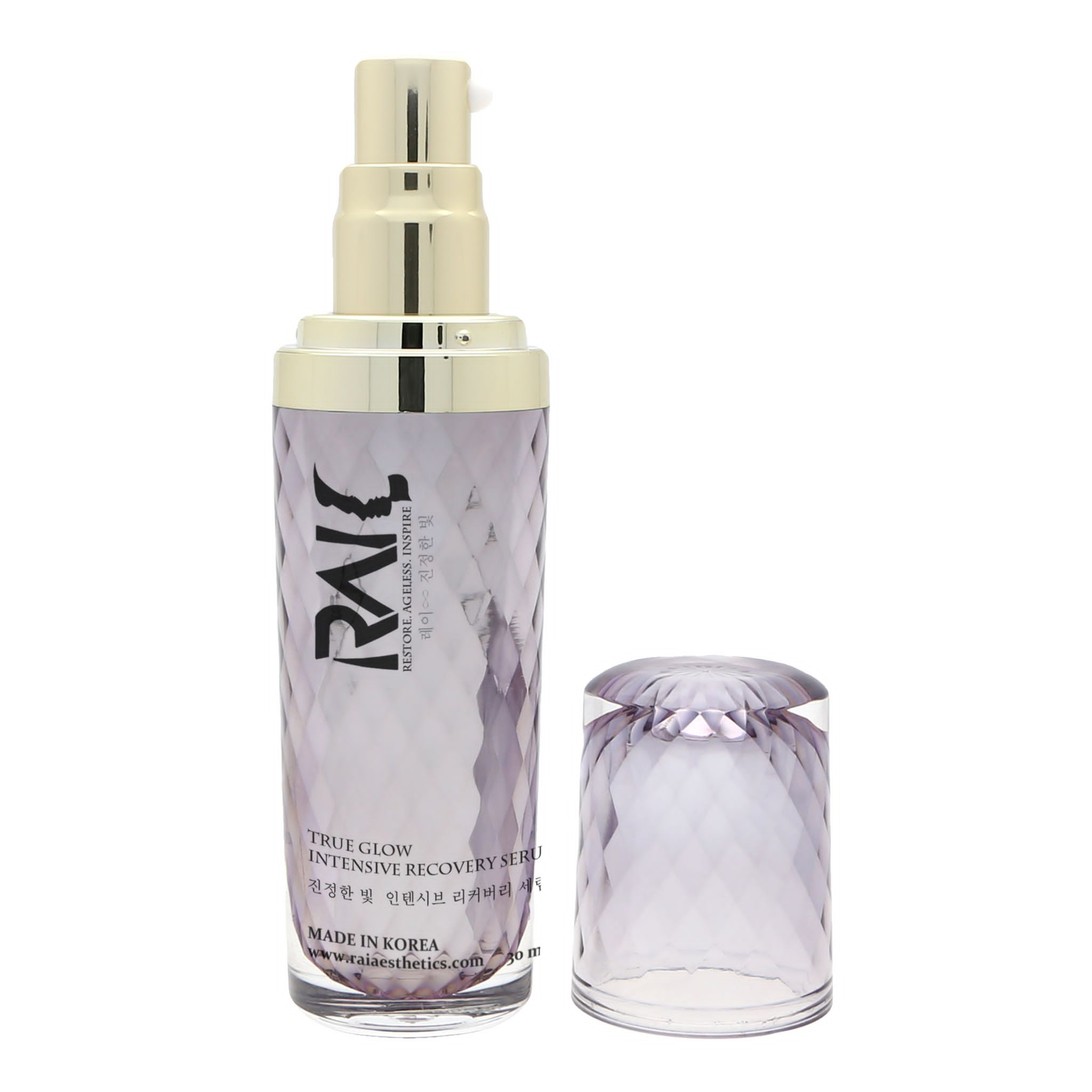
True Glow Post Laser Intensive Recovery Serum
The first step to calm, nourished, recovering skin.
View product →HIFU works deep beneath intact skin. Calm and nourish with a recovery serum, then maintain with a firming serum as collagen rebuilds over the following weeks.
Day-by-day: what to expect after HIFU
HIFU works below the surface, so the recovery looks nothing like laser downtime: no open skin, no crusting, but a treated area that deserves gentle handling for a week or two. Your treating doctor's advice comes first; this is the usual pattern.
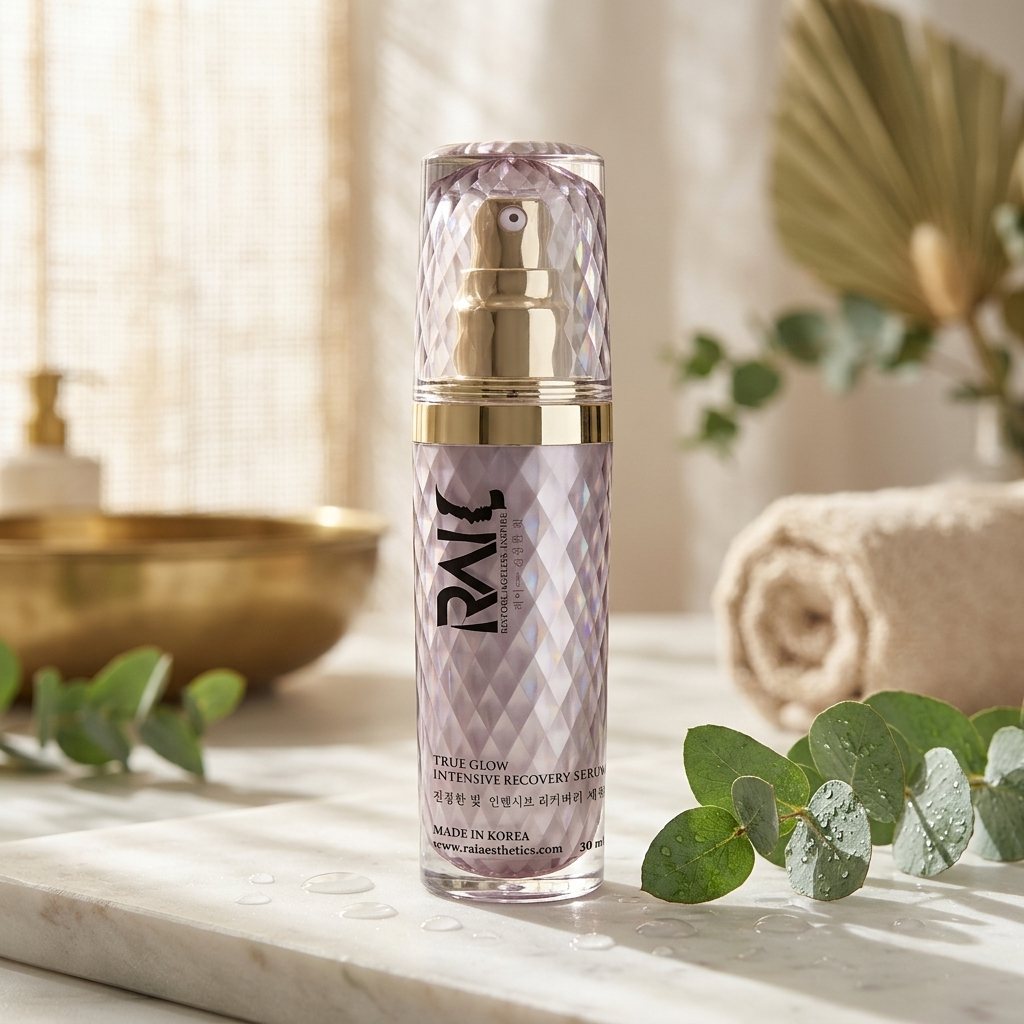
- First few hours: mild redness, warmth and slight puffiness, which usually settle the same day. Some people notice tingling or numb patches along the jaw. Cleanse gently and apply True Glow Intensive Recovery Serum or another calming, fragrance-free product to take the heat out.
- Days 1–3: tenderness when you press the skin or chew is common, and a little swelling can linger along the jawline. Avoid firm massage and heat.
- Days 4–14: tenderness fades. Occasionally small firm spots can be felt under the skin; these generally soften over the following weeks.
- Weeks 2–12: the quiet phase. Collagen builds slowly beneath the surface, and lifting becomes visible from around month two to three. A study of 20 patients assessed improvement at three and six months, and the mild redness, swelling or bruising it recorded resolved within two weeks.
What to put on your skin after HIFU — and what to avoid
Because the barrier is intact, you can return to a normal routine faster than after resurfacing — but faster still means a short pause on anything that irritates.
Put on
- A mild cleanser with lukewarm water, patted dry.
- A calming, fragrance-free serum or moisturiser two to three times a day for the first few days, then as part of your usual routine.
- Broad-spectrum SPF 30 or higher every morning from the next day, reapplied if you are outdoors.
- Light, non-comedogenic makeup once redness has settled, often the same evening; apply and remove it gently while the area is tender.
Leave off
- Exfoliants, anti-ageing actives and strong brightening serums for 24 to 48 hours, longer if the skin is still flushed or tender.
- Saunas, steam rooms, hot yoga and very hot showers for about a week.
- Vigorous exercise for the first 24 hours.
- Facial massage, gua sha, firm pressure, and other energy-based or peel treatments on the same area for one to two weeks.
- Alcohol and smoking, which can prolong swelling and slow the collagen response.
If you are also planning a needling-based treatment, the aftercare is quite different — see our aftercare guide for Morpheus8.
When to call your doctor
HIFU complications are uncommon, and most "is this normal?" moments are. Contact your clinic if you notice:
- Pain or swelling that increases after day three rather than easing.
- A numb patch that is still present after a few weeks.
- Any weakness or asymmetry when you smile, purse your lips or raise your eyebrows — this needs prompt review.
- A firm lump that has not softened after several weeks.
- Blistering, a burn-like mark or a line of small welts along a treatment pass.
A photo sent to the clinic is usually the fastest way to be reassured or seen.
Frequently asked questions
What should you not do after HIFU?
For the first 24 to 48 hours avoid heat — saunas, steam, hot showers — hard exercise, firm massage and strong actives such as exfoliants or anti-ageing products. Skip facials, peels and other energy treatments on the same area for one to two weeks, and limit alcohol. If in doubt, follow your treating doctor's instructions.
How long does it take for HIFU to see results?
Some tightening may be visible straight away from swelling, but the true lift develops as collagen builds. Many people notice a change from around two to three months, and studies assess results at three and six months. Results vary with age, skin thickness and aftercare. Follow your treating doctor's instructions on review timing.
What serum should I use immediately after microneedling?
After microneedling or Morpheus8 the channels are open, so use only a fragrance-free, active-free product your doctor has approved, such as a calming post-procedure serum, for the first day or two. Avoid anything exfoliating, anti-ageing or brightening. Follow your treating doctor's instructions on when to resume your routine.
Can I apply make up after HIFU?
Usually yes, once any redness has settled — often within hours. Choose a light, non-comedogenic formula, apply with clean hands and remove it gently while the area is tender. If the skin feels hot or looks flushed, wait until the next morning. Follow your treating doctor's instructions if they differ.
References
- Park H, Kim E, Kim J, Ro Y, Ko J. High-intensity focused ultrasound for the treatment of wrinkles and skin laxity in seven different facial areas. Annals of Dermatology. 2015;27(6):688-693. doi:10.5021/ad.2015.27.6.688 https://doi.org/10.5021/ad.2015.27.6.688
- Suh DH, Shin MK, Lee SJ, et al. Intense focused ultrasound tightening in Asian skin: clinical and pathologic results. Dermatologic Surgery. 2011;37(11):1595-1602. doi:10.1111/j.1524-4725.2011.02094.x https://doi.org/10.1111/j.1524-4725.2011.02094.x
- Fabi SG. Noninvasive skin tightening: focus on new ultrasound techniques. Clinical, Cosmetic and Investigational Dermatology. 2015;8:47-52. doi:10.2147/CCID.S69118 https://doi.org/10.2147/CCID.S69118