Morpheus8 combines microneedling with radiofrequency energy to remodel skin and the tissue beneath it, improving texture, firmness and tone. Because it creates thousands of tiny channels and delivers heat below the surface, thoughtful aftercare makes a real difference to how quickly and cleanly you heal.
What Morpheus8 does to the skin
The device's fine needles penetrate to a set depth and release radiofrequency energy, creating controlled micro-injuries and deep thermal stimulation. This prompts collagen and elastin renewal. Immediately afterwards the skin is typically red, warm and a little swollen, with a grid-like pattern of tiny dots that fades over one to three days.
As with any treatment that injures the skin to stimulate renewal, the recovery phase carries a risk of inflammation and, in susceptible skin, post-inflammatory pigmentation.
Calming and nourishing the channels
In the first days after Morpheus8, the skin is highly receptive but also vulnerable. The RAI True Glow Post Laser Intensive Recovery Serum supports this window: applied two to three times a day, it helps reduce inflammation, floods the skin with optimal nutrients for synthesis, and lowers the risk of PIH while keeping the skin hydrated and comfortable.
Keep the routine gentle — no actives, no scrubbing, no makeup until your practitioner clears it. Let the micro-channels close and the surface settle.
Building on your result
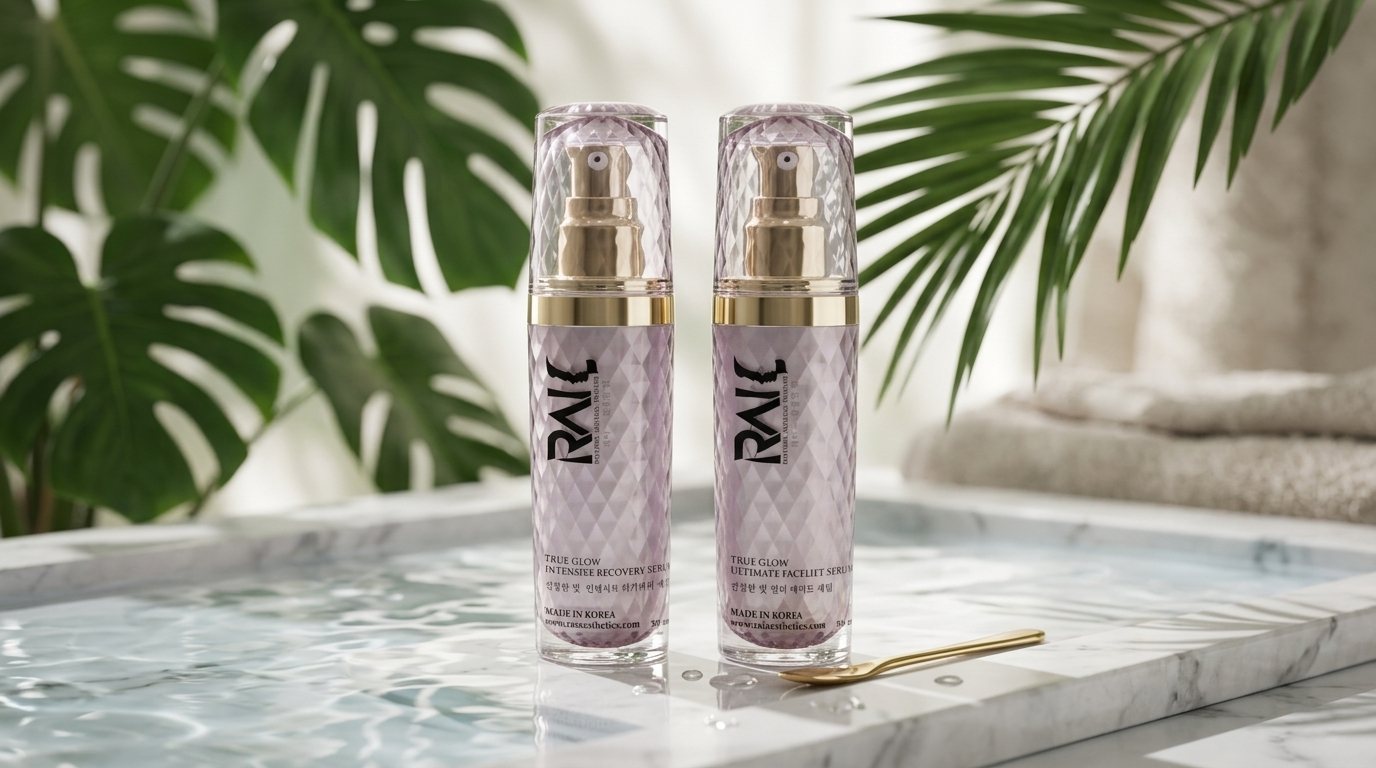
Two days after treatment, the RAI True Glow Ultimate Facelift Serum can be introduced as step two, twice daily, to support the tightening and tone-evening effects Morpheus8 sets in motion. This two-step approach mirrors the recover-then-maintain philosophy behind the whole RAI range.
Protecting your investment
Sun protection is essential after Morpheus8, as UV exposure on healing skin invites pigmentation. Hydrate consistently and stay patient — the full remodelling result develops over weeks to months as new collagen matures.
The RAI recover-then-maintain approach
Whatever your skin concern, the principle behind the RAI True Glow range stays the same: help the skin recover first, then maintain the result. After any treatment or during any flare, the skin is at its most vulnerable — and its most receptive. Calming inflammation and supplying the right nutrients during this window makes a real difference to how the skin heals and how it looks afterward.
That is the role of the two-step ritual. The True Glow Post Laser Intensive Recovery Serum is step one — used two to three times a day after a laser, HIFU, Morpheus8, extraction or cleansing facial to reduce inflammation, deliver optimal nutrients for skin synthesis and lower the risk of post-inflammatory pigmentation. From two days later, the True Glow Ultimate Facelift Serum becomes step two, used twice daily to tighten, nourish and brighten for lasting radiance.
Every formula in the range is plant-based and free from steroids and hydroquinone, so you support your skin without the risks those harsher agents carry. Paired with daily sun protection and a gentle, consistent routine, this is how skin is guided back toward health — and kept there.
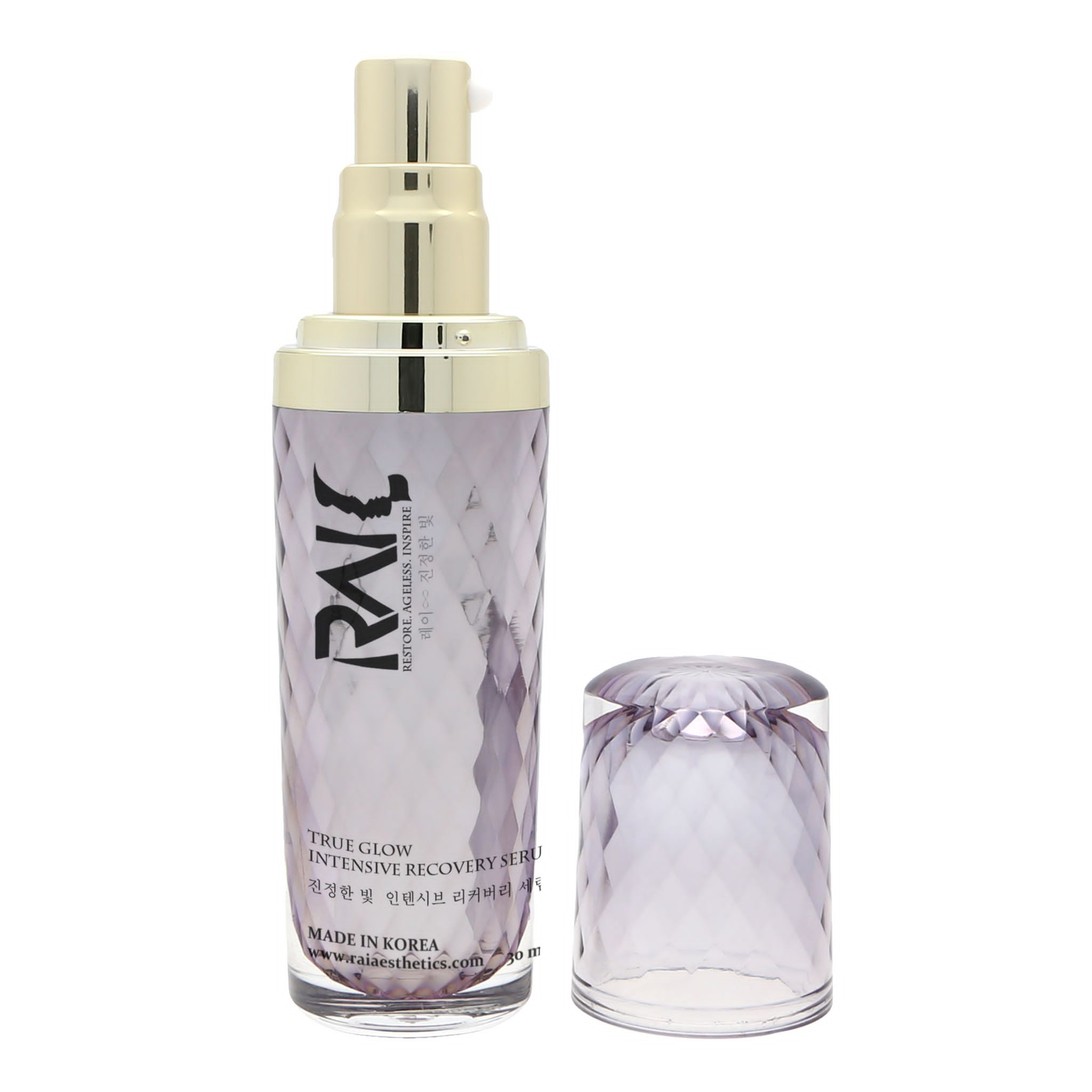
True Glow Post Laser Intensive Recovery Serum
The first step to calm, nourished, recovering skin.
View product →Morpheus8 renews skin through micro-injury and heat. Calm and nourish the channels with a recovery serum, protect from sun, then maintain with a firming serum.
Day-by-day: what to expect after Morpheus8
Morpheus8 creates thousands of tiny needle channels and warms the tissue beneath them, so recovery sits between microneedling and a light resurfacing laser. Your treating doctor's protocol comes first; this is the usual pattern.
- Day 0 (first 24 hours): the skin is red, hot and swollen, with a fine grid of needle marks. Pinpoint bleeding stops within an hour or so. Use cool compresses and only what your doctor has approved — typically nothing at first, then a calming post-procedure serum once the channels have closed.
- Days 1–2: redness looks like a sunburn and swelling peaks, often around the eyes. Bruising can appear in thinner areas. Sunscreen can usually start; makeup cannot.
- Days 3–5: a sandpaper texture develops as the micro-crusts dry, then flake. Redness fades to pink. Many people return to work and light makeup now.
- Days 7–14: texture is smooth again, pinkness is gone, and your normal routine can resume step by step.
- Weeks 2–24: early tightening shows from about week two, and remodelling continues for three to six months, so results are usually judged at three months.
What to put on your skin — and what to avoid
The first 48 hours are the critical window: the channels are open, so anything you apply can travel deeper than usual.
Put on
- Nothing but cool water for the first several hours, unless your doctor gives you a specific product.
- From day one, a gentle cleanser and a calming, fragrance-free, active-free serum or moisturiser, applied with clean hands two to three times a day.
- Broad-spectrum SPF 30 or higher every morning from day one or two, as your doctor directs, and a hat outdoors.
- Mineral or non-comedogenic makeup from around day two to three, once nothing is open or weeping; wash your brushes first.
Leave off
- Exfoliants, anti-ageing actives, brightening serums, scrubs and alcohol-based toners for at least a week, until your doctor clears them.
- Picking or rubbing the micro-crusts — let them shed on their own.
- Saunas, steam, hot yoga, swimming and sweaty exercise for 48 to 72 hours.
- Direct sun for three days, and unprotected sun for several weeks.
- Other facials, peels or energy treatments on the same area until cleared.
Deciding between this and HIFU? The downtime is quite different — see our HIFU aftercare guide.
When to call your doctor
Most Morpheus8 recoveries are uneventful. Contact your clinic, with a photo, if you notice:
- Swelling or pain that worsens after day three.
- Yellow crusting, pus, an unpleasant smell, or redness spreading beyond the treated area.
- Clusters of small blisters or sores, especially with a history of cold sores — mention that history before treatment.
- Fever or chills.
- A grid pattern still clearly visible after two weeks, or any raised or indented areas.
- New dark patches in the treated area — early review helps limit post-inflammatory hyperpigmentation, which is reported more often in Asian skin.
Mild bruising, tightness and a few days of sandpaper texture are expected.
Frequently asked questions
What to put on skin after Morpheus8?
For the first few hours, nothing but cool water unless your doctor provides a product. After that, a gentle cleanser, a calming fragrance-free serum without actives — True Glow Intensive Recovery Serum is formulated for this stage — and broad-spectrum sunscreen from day one or two. Follow your treating doctor's instructions on timing.
What should you not do after Morpheus8?
Do not apply makeup or active skincare in the first 48 hours, do not pick the micro-crusts, and avoid sun, heat, saunas, swimming and sweaty exercise for two to three days. Hold exfoliants and anti-ageing actives for at least a week. Follow your treating doctor's instructions before restarting anything.
How to maximize Morpheus8 results?
Protect the skin while it remodels: daily sunscreen, consistent hydration, no smoking, and a gentle routine for the first week. Complete the recommended course — results build over three to six months and across sessions — and add maintenance skincare once cleared. Follow your treating doctor's instructions on spacing and follow-up.
How long does it take for the face to recover after Morpheus8?
Redness and swelling usually settle in two to five days, the sandpaper texture flakes away by about day five to seven, and the skin looks normal within one to two weeks. Collagen remodelling beneath the surface continues for three to six months. Timelines vary with depth settings, so follow your treating doctor's instructions.
References
- Dayan E, Chia C, Burns AJ, Theodorou S. Adjustable depth fractional radiofrequency combined with bipolar radiofrequency: a minimally invasive combination treatment for skin laxity. Aesthetic Surgery Journal. 2019;39(Suppl 3):S112-S119. doi:10.1093/asj/sjz055 https://doi.org/10.1093/asj/sjz055
- Hantash BM, Renton B, Berkowitz RL, Stridde BC, Newman J. Pilot clinical study of a novel minimally invasive bipolar microneedle radiofrequency device. Lasers in Surgery and Medicine. 2009;41(2):87-95. doi:10.1002/lsm.20687 https://doi.org/10.1002/lsm.20687
- Alster TS, Graham PM. Microneedling: a review and practical guide. Dermatologic Surgery. 2018;44(3):397-404. doi:10.1097/DSS.0000000000001248 https://doi.org/10.1097/DSS.0000000000001248