After a laser, HIFU, Morpheus8 or a deep resurfacing treatment, the product you reach for next matters more than most people realise. The recovery window is where good outcomes are protected and great ones are made. But the shelves are crowded and the marketing is loud — so how do you actually choose the best post-laser recovery serum?
Start with what your skin needs, not the label
Freshly treated skin has three needs: intense hydration, calmed inflammation, and the nutrients to rebuild. A good recovery serum meets all three. Be wary of serums that lead with anti-ageing actives or brightening acids — those belong to a later stage, not the vulnerable days right after a procedure, when they can irritate rather than help.
The single most useful question to ask is: was this formulated for post-procedure skin specifically, or is it a general serum being marketed for recovery? The former will prioritise soothing and barrier support; the latter often won't.
The ingredients to seek — and avoid
Seek: humectants and barrier-supporting ingredients for hydration, and gentle plant-based actives known for calming inflammation and supporting healing. Avoid: retinoids, high-strength vitamin C, AHAs and BHAs, added fragrance, and — critically — steroids and hydroquinone. Steroids can thin the skin with prolonged use, and hydroquinone carries a risk of paradoxical darkening.
The RAI True Glow Post Laser Intensive Recovery Serum is built on this logic: a plant-based, steroid- and hydroquinone-free formula that reduces inflammation, delivers optimal nutrients for skin synthesis and lowers the risk of post-inflammatory hyperpigmentation.
Match the serum to the procedure
The same recovery serum can serve many treatments when it's formulated around universal healing needs. The RAI serum is used after ablative and resurfacing lasers, HIFU, Morpheus8, chemical peels, extraction and cleansing facials — typically two to three times a day, with more frequent application in the first days after more aggressive treatments.
Always follow your own doctor's specific aftercare instructions, which take priority over any general guidance.
A shortcut: follow what the experts use
One reliable shortcut is to see what leading practitioners choose for their own patients. The RAI True Glow Post Laser Intensive Recovery Serum is selected by aesthetic key opinion leader Dr Sin Yong for post-laser recovery — a meaningful signal when you're deciding what to trust on your healing skin.
The RAI recover-then-maintain approach
Whatever your skin concern, the principle behind the RAI True Glow range stays the same: help the skin recover first, then maintain the result. After any treatment or during any flare, the skin is at its most vulnerable — and its most receptive. Calming inflammation and supplying the right nutrients during this window makes a real difference to how the skin heals and how it looks afterward.
That is the role of the two-step ritual. The True Glow Post Laser Intensive Recovery Serum is step one — used two to three times a day after a laser, HIFU, Morpheus8, extraction or cleansing facial to reduce inflammation, deliver optimal nutrients for skin synthesis and lower the risk of post-inflammatory pigmentation. From two days later, the True Glow Ultimate Facelift Serum becomes step two, used twice daily to tighten, nourish and brighten for lasting radiance.
Every formula in the range is plant-based and free from steroids and hydroquinone, so you support your skin without the risks those harsher agents carry. Paired with daily sun protection and a gentle, consistent routine, this is how skin is guided back toward health — and kept there.
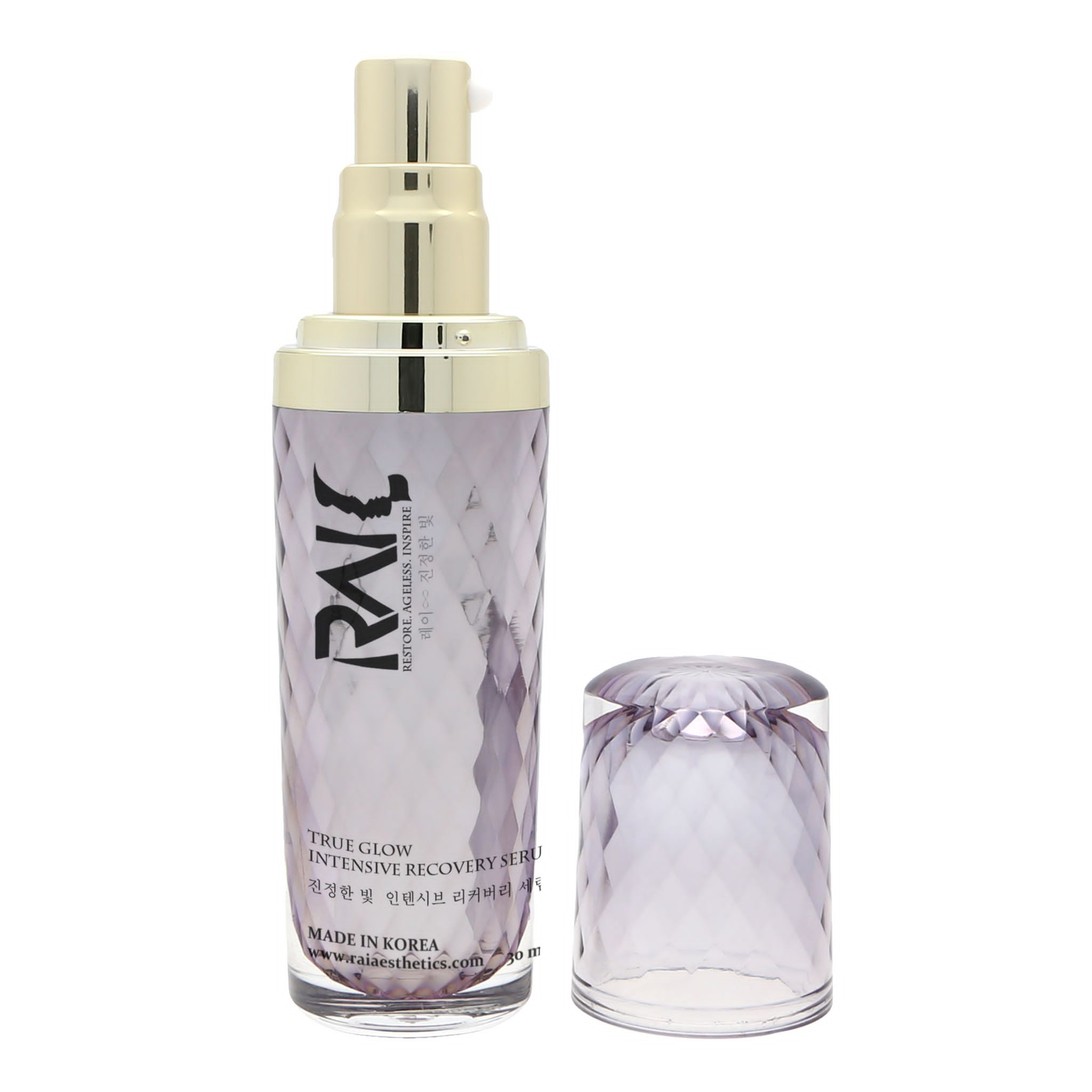
True Glow Post Laser Intensive Recovery Serum
The first step to calm, nourished, recovering skin.
View product →Choose a post-laser recovery serum formulated specifically for healing skin: hydrating, calming, nutrient-rich, and free from steroids, hydroquinone and harsh actives.
Post-procedure skincare by phase: the first 48 hours, the first week, and after
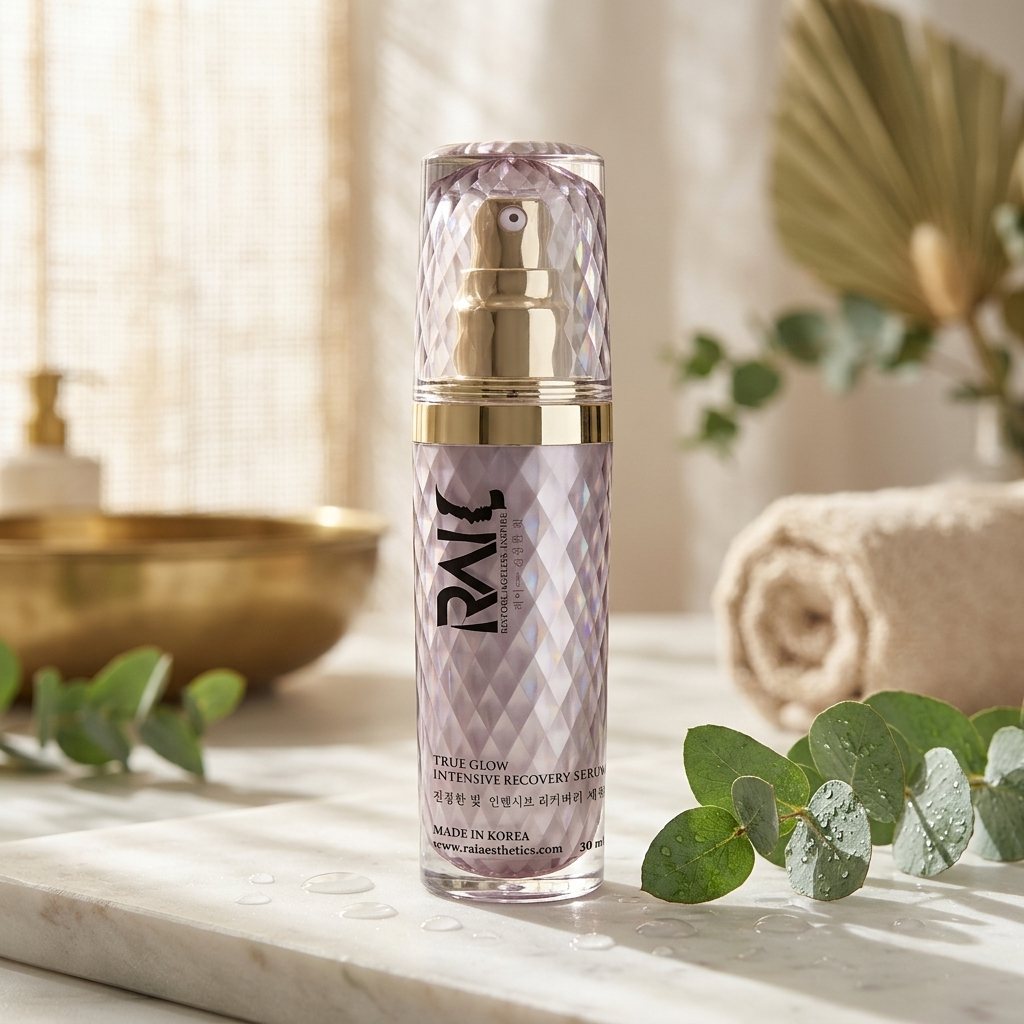
Whatever the procedure, post-procedure skincare follows the same shape: calm, protect, then rebuild. Your treating doctor's aftercare sheet comes first; this is the usual pattern.
- Hours 0–48 (calm): the skin is warm, pink and reactive. Use nothing your doctor has not approved. Once cleared, cleanse with lukewarm water and apply a recovery serum designed for post-procedure skin or a plain, fragrance-free moisturiser, two to three times a day. No makeup, heat or exercise.
- Days 2–7 (protect): the surface is closing. A study of skin treated with a fractional laser found the continuity of the epidermal basal layer restored at 24 hours and complete regeneration by day seven, which is why this week is about hydration and broad-spectrum sunscreen rather than actives. Flaking and tightness are expected.
- Week 2 onwards (rebuild): once the skin looks and feels normal, reintroduce your usual products one at a time, mildest first. Daily sun protection continues for several weeks, because new skin pigments easily.
The recovery serum on this page is formulated for the first two phases, which is why it is step one of the ritual described above.
How post-procedure skincare differs by procedure
The phases are the same; their length changes with how deep the treatment reached. Your doctor sets the actual dates.
Ablative and fractional lasers
Open or micro-wounded skin and the longest calm phase; sunscreen often waits until the surface has closed. See our guide to skin recovery after CO2 laser.
Chemical peels
A review of peel practice classifies peels as superficial (epidermis only), medium (reaching the papillary dermis) or deep (reticular dermis), and notes that depth brings longer recovery and more potential complications. Our chemical peel recovery guide covers the day-by-day.
Microneedling and Morpheus8
Channels close within hours, but anything applied in that window travels deeper than usual, so the first day is often product-free. See skin care after microneedling and the Morpheus8 recovery guide.
HIFU and other non-ablative tightening
The barrier stays intact, so the calm phase is often a day or two of tenderness. Our HIFU aftercare guide explains what to expect.
Extraction and cleansing facials
Freshly extracted pores are open: a calming serum the same evening and no makeup overnight is usually enough. See recovery after an extraction facial.
Reading a post-procedure product label: a short checklist
Before anything touches recovering skin, ask five questions. If any answer is no, keep it for week two.
- Is it fragrance-free? Scent is a common trigger on reactive skin.
- Is it free of exfoliants, anti-ageing actives and brightening actives? Those belong to the rebuild phase, not the calm phase.
- Is the ingredient list short? Fewer variables if the skin reacts.
- Does it state what it is for? A product formulated for post-procedure skin, and free from steroids and hydroquinone as this range is, is easier to place in a routine than a general-purpose serum.
- Has your doctor seen it? A photo of the label sent to the clinic settles most questions.
Skincare supports recovery; it does not replace medical care. A review of post-inflammatory hyperpigmentation in skin of colour notes that it affects darker skin with greater frequency and severity and lists sun protection as first-line management — so if you see new dark patches, spreading redness, pus or yellow crusting, contact your treating doctor rather than another product.
Frequently asked questions
What is post-procedure skincare?
Post-procedure skincare is the simplified routine used while skin recovers from a treatment such as a laser, peel, microneedling or HIFU: a mild cleanser, a calming fragrance-free serum or moisturiser, and daily sunscreen, with exfoliants and anti-ageing actives paused. The exact timing depends on the treatment, so follow your treating doctor's instructions.
What skincare should you use after a cosmetic procedure?
In the first days, use only what your doctor approves: lukewarm water, a fragrance-free recovery serum or plain moisturiser applied two to three times a day, and broad-spectrum sunscreen once the surface has closed. Hold scrubs, exfoliants and brightening products until the skin looks normal. Follow your treating doctor's instructions on when to restart them.
How long should you keep up post-procedure skincare?
For most non-ablative treatments, three to seven days of the simplified routine is typical; after resurfacing lasers or medium peels it can be two weeks or more. Daily sun protection should continue for several weeks because new skin pigments easily. Timelines vary with depth and skin type, so follow your treating doctor's instructions.
Can I go back to my normal skincare after a procedure?
Yes, but gradually. Once redness, flaking and tenderness have settled, reintroduce one product every few days, mildest first, and pause if stinging or new redness appears. Exfoliants and anti-ageing actives usually come back last. If you are unsure whether the skin is ready, follow your treating doctor's instructions.
References
- Laubach HJ, Tannous Z, Anderson RR, Manstein D. Skin responses to fractional photothermolysis. Lasers in Surgery and Medicine. 2006;38(2):142-149. doi:10.1002/lsm.20254. PMID 16392146. https://doi.org/10.1002/lsm.20254
- Rendon MI, Berson DS, Cohen JL, Roberts WE, Starker I, Wang B. Evidence and considerations in the application of chemical peels in skin disorders and aesthetic resurfacing. Journal of Clinical and Aesthetic Dermatology. 2010;3(7):32-43. PMID 20725555; PMCID PMC2921757. https://pmc.ncbi.nlm.nih.gov/articles/PMC2921757/
- Davis EC, Callender VD. Postinflammatory hyperpigmentation: a review of the epidemiology, clinical features, and treatment options in skin of color. Journal of Clinical and Aesthetic Dermatology. 2010;3(7):20-31. PMID 20725554; PMCID PMC2921758. https://jcadonline.com/postinflammatory-hyperpigmentation-a-review-of-the-epidemiology-clinical-features-and-treatment-options-in-skin-of-color/